← All articles
Conditions
 Dr. Joan J. Morales Lappot, MD
3 min read · Leer en español
Kidney stones: why they form and how to prevent the next one
Dr. Joan J. Morales Lappot, MD3 min read · Leer en español
In briefKidney stones are one of the most common reasons people look up a kidney doctor, and one of the most preventable problems I treat. About half of people who pass a stone will form another within about ten years unless something changes.
How a stone forms
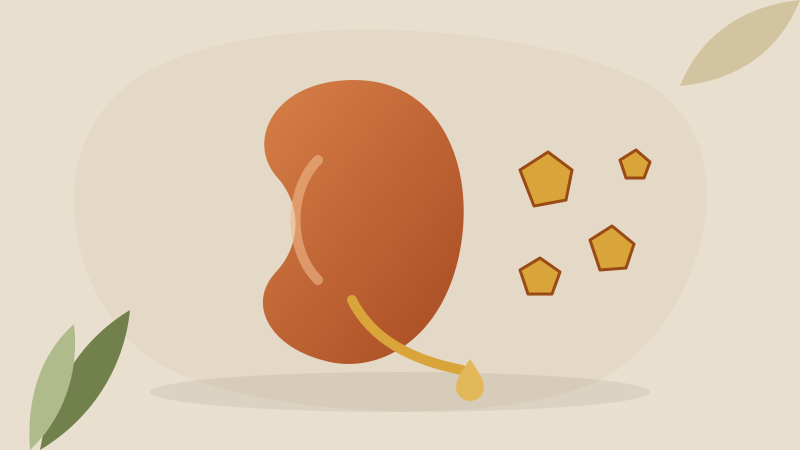
Urine carries dissolved minerals. When there is too much mineral and too little water, tiny crystals form and slowly grow into a stone. Most stones are calcium oxalate. Others are uric acid, calcium phosphate, struvite (after some infections) or, rarely, cystine.
What it feels like
- Sudden, severe pain in the side or back that can move toward the groin
- Pain that comes in waves
- Pink, red or brown urine
- Nausea or vomiting
- Needing to urinate often or urgently
Get care right away if:
- You have fever or chills with the pain
- You cannot keep fluids down
- The pain is not controlled
- You have only one kidney
Preventing the next stone
- Drink enough to make about 2.5 liters (10 cups) of urine a day. Pale yellow is the goal.
- Cut back on salt. Extra sodium pulls calcium into the urine.
- Do not cut out calcium. Calcium from food, eaten with meals, actually lowers oxalate absorption.
- If your stones are calcium oxalate, go easy on very high-oxalate foods such as spinach, nuts and beets.
- Limit large portions of meat, and add citrus. Lemon and lime provide citrate, a natural stone blocker.
- Here in South Florida, drink more on hot days and when you exercise.
Why testing matters
If you have had more than one stone, a 24-hour urine collection and an analysis of the stone itself show what is driving them. Then prevention can be specific, sometimes with a simple medicine.
Bottom line: Water is the cheapest stone medicine there is. If you have had a stone, let us find out why, so you do not have another.
Questions about your kidneys?Call (954) 989-9553