
Dialysis and kidney transplant: how each works, when you need it, and what it cannot do
 Dr. Joan J. Morales Lappot, MD
9 min read · Leer en español
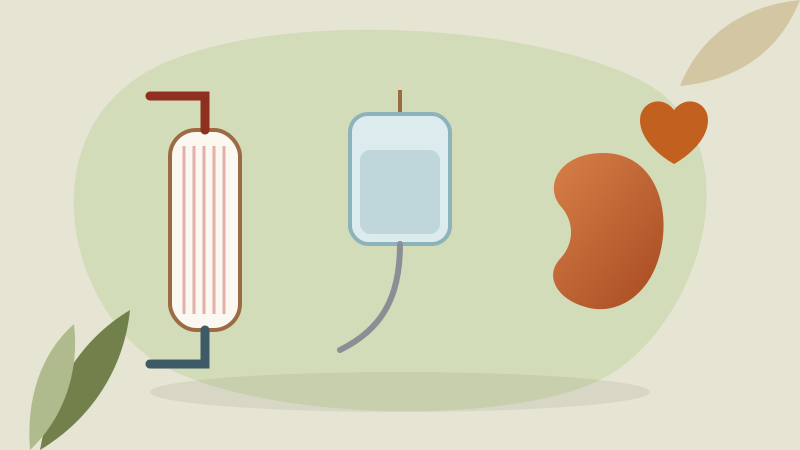
In briefTwo questions come up in my office almost every day: "When do I need dialysis?" and "If I need it and don't do it, how long will I live?" They deserve honest, unhurried answers. This guide explains the three ways kidney function can be replaced, what each one involves, and what none of them can do.
First, what your own kidneys do
Healthy kidneys work 24 hours a day, every day. They filter your blood, remove waste and extra water, and keep sodium, potassium, calcium, phosphorus and acid in a narrow, safe range. They also act as hormone factories: they make erythropoietin, which tells your bone marrow to make red blood cells, they activate vitamin D for strong bones, and they help control your blood pressure.
When do I need dialysis?
Not because of one number. There is no single creatinine or eGFR value that automatically means dialysis. Most people who start have an eGFR below about 10 to 15, but many people live well with numbers in that range for months or years. I look at the whole person, not only the lab report.
Dialysis is usually recommended when kidney failure starts causing problems that medicines and diet can no longer control:
- Nausea, vomiting, poor appetite or weight loss
- Deep tiredness, trouble thinking clearly, or a metallic taste
- Itching that will not go away
- Fluid building up in the legs or lungs despite water pills
- Potassium or acid levels that stay dangerously high
- Inflammation around the heart or other serious complications
A large study called IDEAL compared starting dialysis early, based on numbers alone, with starting later when symptoms appeared. People who started early did not live longer. Put simply, dialysis is usually reserved for those who are sick and tired of feeling sick and tired.
- Trouble breathing or chest pain
- Confusion or extreme drowsiness
- Very little or no urine for a day
- Weakness with a slow or irregular heartbeat, which can mean dangerous potassium
If I need dialysis and choose not to start it, how long will I live?
This is a fair question, and the answer depends on the person. When kidney function is extremely low and serious complications have appeared, such as very high potassium or fluid in the lungs, life without dialysis may be measured in days to weeks.
For others, especially older adults with several other health conditions whose kidney function is declining slowly, the picture is different. Studies of people who chose care without dialysis found that many lived about one to two years, and some longer, often with good symptom control and fewer hospital visits. For some of them, dialysis would have added little time while taking away time at home.
Choosing not to start dialysis is a legitimate, respected choice. It is called conservative kidney management: we keep treating symptoms, anemia, fluid and blood pressure, focus on comfort and what matters most to you, and involve palliative and hospice care when the time comes. Whatever you decide, you will not be abandoned.
Option 1: Hemodialysis
In hemodialysis, a machine pumps your blood through a special filter called a dialyzer. Inside it, thousands of hollow fibers let waste and extra water cross a thin membrane into a cleansing fluid called dialysate, while blood cells and proteins stay in your blood.
To do this safely, you need a strong, easy-to-reach blood vessel, called an access:
- AV fistula: a surgeon joins an artery directly to a vein, usually in the arm. Over two to four months the vein grows larger and stronger. It is the best access for most people: it lasts the longest and has the fewest infections.
- AV graft: a soft tube connects the artery and vein when your own veins are too small. It can be used after a few weeks, but tends to clot or narrow more often.
- Catheter: a tube in a large vein of the neck or chest, used when dialysis is needed before a fistula or graft is ready. It has the highest infection risk, so we try to make it temporary.
In-center hemodialysis is usually three times a week for about three to four hours, with nurses and technicians doing the work. Home hemodialysis is done after training, usually in shorter, more frequent sessions that many people find gentler.
Option 2: Peritoneal dialysis
Peritoneal dialysis uses your own body as the filter. The peritoneum, the thin lining of your belly, is full of tiny blood vessels. A soft catheter is placed through the skin of the abdomen. Clean dialysis fluid flows in, stays for a few hours while waste and extra water move from the blood into it, and is then drained out and replaced.
- Done at home, without needles
- By hand about four times a day, or overnight with a machine called a cycler while you sleep
- Gentle and continuous, which helps some people keep their remaining kidney function longer
- More flexible for work and travel
- Needs a clean space at home, storage for supplies, and careful catheter care to avoid infection
Option 3: Kidney transplant
For many people, a kidney transplant offers the longest life and the most freedom. A healthy kidney from a donor is placed in the lower belly, connected to the blood vessels that go to the leg, and its ureter is attached to your bladder. Your own kidneys are usually left where they are.
- The kidney can come from a living donor, such as a relative or friend, or from a deceased donor
- A kidney from a living donor often works sooner and lasts longer
- In the United States, you can be placed on the waiting list once your eGFR is 20 or lower, so it pays to start the evaluation early, even before dialysis
- Anti-rejection medicines are needed every day for as long as the kidney works
- Not everyone is a candidate; heart health, infections, cancer history and other conditions are carefully reviewed
The options side by side
| In-center hemodialysis | Home hemodialysis | Peritoneal dialysis | Kidney transplant | |
|---|---|---|---|---|
| Where | Dialysis center | Home | Home | Surgery at a transplant center |
| How often | 3 times a week, 3–4 hours | Shorter, more frequent sessions | Every day: by hand or overnight | One surgery, then daily medicines |
| Needles | Yes, at each session | Yes, often placed yourself | No | No |
| Diet and fluids | Strictest limits | Usually more relaxed | Usually more relaxed | Most freedom |
| Main thing to know | Staff do the work for you | Needs a trained partner and space | Needs a clean space and supplies | Best long-term option for many; waiting time varies |
There is no single best answer for everyone, only the best answer for you, and it can change over time. Many people move from one option to another over the years.
How we decide together at Florida Kidney Physicians
Because Florida Kidney Physicians is a large network of kidney doctors who work with dialysis units and transplant centers across the state, we refer patients to every one of these options often. That experience means we can help you get the right one smoothly. It also means we know when not to: we recommend dialysis or transplant only when you truly need it, never because of a number alone. I have no conflicts of interest with large dialysis organizations, so the advice you receive is about your health and your life.
If your kidney function is declining, the best time to learn about these options is before you need them. That gives time to place a fistula, start a transplant evaluation, or plan home dialysis calmly instead of in an emergency.
How fortunate we are
It is easy to forget how remarkable these treatments are. Not long ago, kidney failure meant certain death. Since 1972, Medicare has covered dialysis and kidney transplant for most Americans with kidney failure, regardless of age, something few countries offer. Around the world, an estimated two to seven million people a year die because they cannot get dialysis or a transplant. Here, every one of these options is available to you. Our job is to help you use them wisely.