← All articles
Symptoms
 Dr. Joan J. Morales Lappot, MD
3 min read · Leer en español
Kidney pain or back pain? How to tell the difference
Dr. Joan J. Morales Lappot, MD3 min read · Leer en español
In briefMany people who search for "kidney pain" actually have a sore back muscle. The location and the company the pain keeps usually tell the two apart.
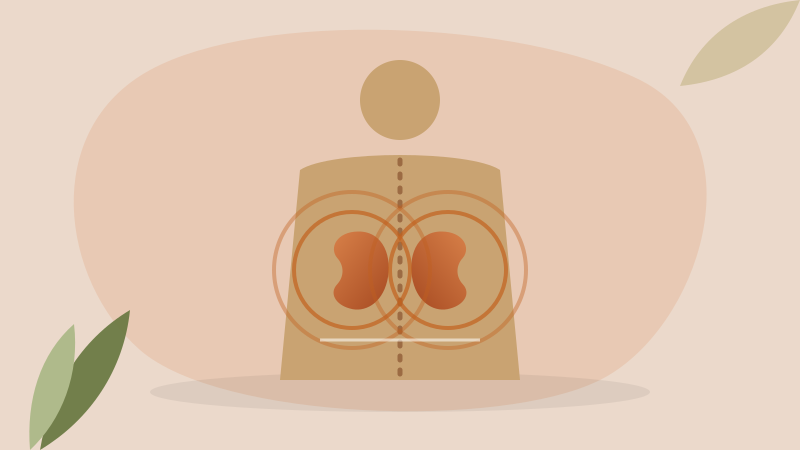
Where the kidneys are
Your kidneys sit high in the back, under the lower ribs, on either side of the spine. Kidney pain is usually felt deep in the side or flank, just below the ribs, often on one side.
Clues it may be the kidney
- Pain deep in the flank rather than in the lower back muscles
- Pain that does not change when you move or stretch
- Fever, chills, burning with urination or cloudy urine
- Blood in the urine
- Waves of sharp pain moving toward the groin (often a stone)
Get care right away if:
- Pain comes with fever, chills or vomiting
- You see blood in your urine
- You are making very little urine
- The pain is severe or sudden
Clues it is probably muscle
- Pain in the lower back, across the belt line
- Pain that gets worse with bending, lifting or certain positions
- Tenderness when you press on the muscle
- Improvement with rest, heat or stretching
Common kidney causes
The most common causes of true kidney pain are kidney stones and kidney infections. Large cysts, a blockage of urine flow and, rarely, a blood clot in a kidney vessel can also cause it. Chronic kidney disease itself usually causes no pain at all.
Bottom line: Back pain that changes with movement is usually muscle. Deep side pain with fever, urinary symptoms or blood deserves a prompt visit.
Questions about your kidneys?Call (954) 989-9553